
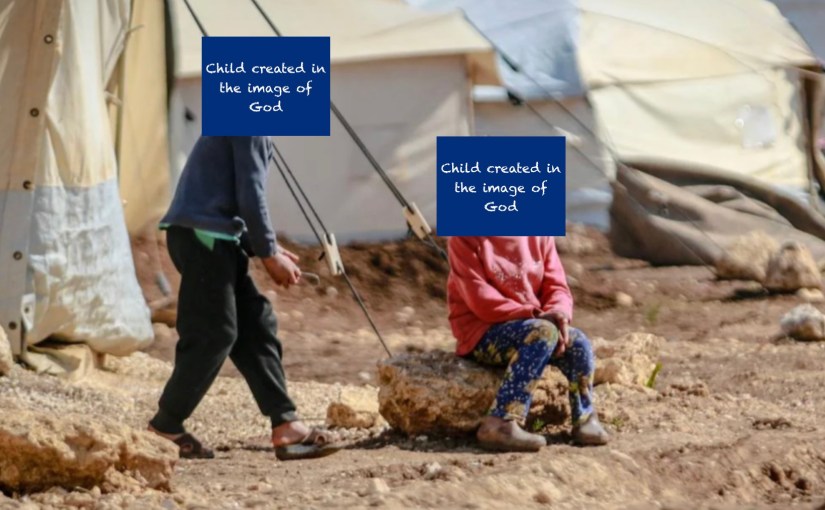
For a few minutes, consider yourself as Fatima, a resident of Gaza, and then decide.
Picture yourself as Fatima, a resident of Gaza. You are 17 years old, youthful, yet severely malnourished because of lack of food. Your will is strong, but your body feels like it’s about to collapse. You hear of potential aid with food coming your way, yet freeze at the thought of approaching with a pan, remembering that many of your neighbors don’t come back alive. You want to escape the place you are at, but you are weak, thirsty, famished, sleep-deprived, without a car, dealing with the stages of mourning, and hardly able to think straight. Now, you are told to simply leave Gaza.
Where would you go?
Seriously. As Fatima, where would you go?
Here are some options to think about:
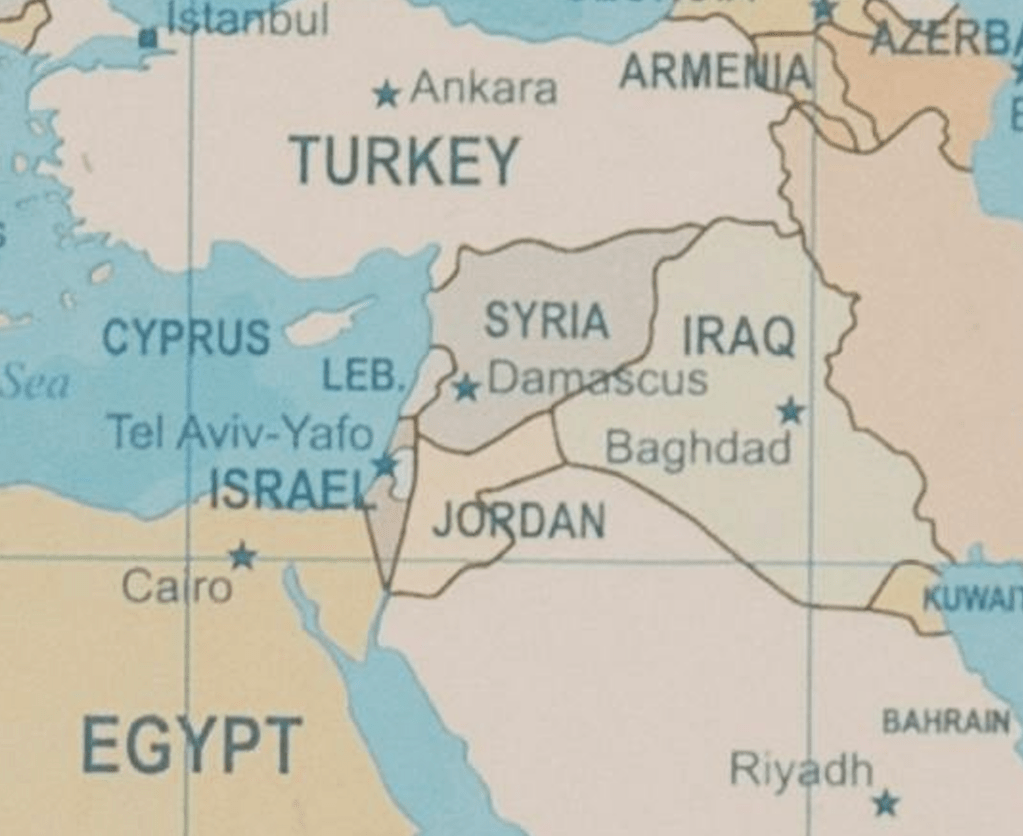
To the south, you have Egypt, a path that is closed.
To the east, you have Israel.
To the north, you have Israel.
To the west, you have the sea.
Now that you have your options, how would you get there?
You, Fatima, don’t have a car, money, your family members have been killed, and you don’t even know how or when you will get your next bite of food.
Now, strategize a plan for yourself.
Not so easy, is it?
Fatima is a symbolic representation of the many lives in Gaza. She’s a privileged representation, since many Gaza residents have extra layers of hardship, such as mutilated bodies, the responsibility of many children, religious discrimination for being Christian, and being under the age of twelve.
As Fatima, imagine feeling the physical pain of hunger and experiencing its mental effects. Starvation is a slow process of human decay involving physical, mental, and emotional pain. You know that innocent people were kidnapped, yet lack understanding why your life, and that of your neighbors, decreases in value due to crimes committed by members of a terrorist organization.
If it happened to you,
a) would you consider it an act of justice to be punished for crimes you did not commit?; and
b) would you consider it a reasonable suggestion to be told to leave when you don’t have a place to go or resources to make a move?
Destruction of the Innocent Doesn’t Result in Peace
Two things can be true: 1) to be horrified and denounce the way Hamas, a terrorist group, has treated the Israeli victims, and 2) be also horrified at the response by the Israeli forces, which have shown a pattern of negligent and abusive war tactics resulting in killing, mutilation, and starvation of civilians in Gaza, including children under the age of twelve and women, who did not cause the attack.
A nation has a right to defend itself from attacks, but not at the expense of innocent civilian life, such as by restricting access to food and medical aid supplies, shooting at starving civilians attempting to get food, creating an environment of man-made famine, and through a pattern of bombing places of prayer, hospitals, and schools.
Most nations have policies in place that protect human life, since it’s recognized, morally and legally, that every human life has value. Many nations around the world have citizens who are kidnapped; however, they are not permitted to bomb the locations of the perpetrators due to the potential harmful effects on innocent civilian lives. In the same way, Israel should not be excused from its long-term negligent and abusive war tactics.
A Path of Hope
There could certainly be a path of hope for the residents of Gaza. Nations have united in the past with the purpose of protecting human dignity.
Leaders of powerful nations could act, not out of necessity, but in the name of humanity, and most importantly, justice in the eyes of God.
When you are called before your Creator and asked what you did for His children in Gaza, what will you be able to say?
“And the King will answer them, ‘Truly, I say to you, as you did it to one of the least of these my brethren, you did it to me.’ Then he will say to those at his left hand, ‘Depart from me, you cursed, into the eternal fire prepared for the devil and his angels; for I was hungry and you gave me no food, I was thirsty and you gave me no drink ….’” (Matthew 25:40-42, RSVCE)
Time will tell what each nation does with its position of power as a response to the cries-for-help from the children of Gaza.
But, we ought to consider one thing: when does indifference become complicity?
Scripture quotations are from The Catholic Edition of the Revised Standard Version of the Bible, copyright © 1965, 1966 National Council of the Churches of Christ in the United States of America. Used by permission. All rights reserved worldwide.
 Simplified Information by Nicole Shapiro, J.D.