
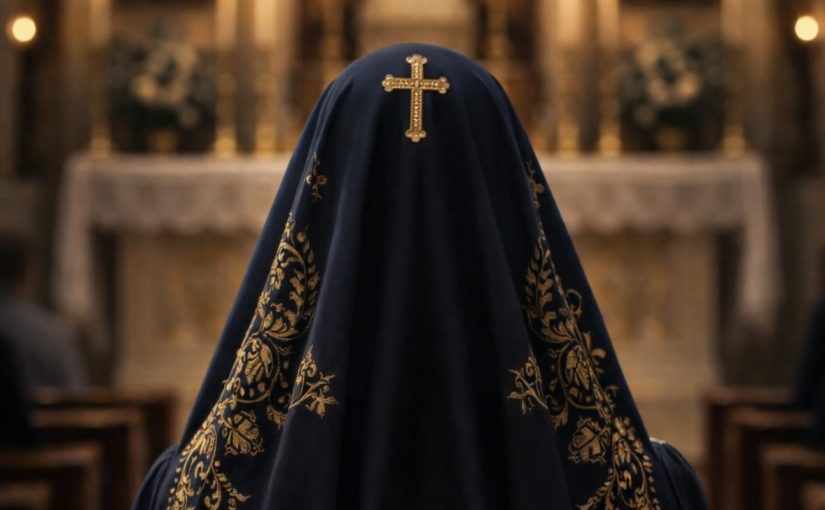
Have you ever wondered why many young people travel long distances to attend a Traditional Latin Mass?
Or why do people who previously identified as nonreligious become eager to practice the faith after attending it?
You are about to unveil the mystery of the Mass, which converts non-Catholics into practicing Catholics and brings Catholics back to their faith with an eagerness to unite with the will of God. It makes attendees feel the gospel come alive in a very real and present way, while offering a type of structured worship that leads attendees to feel a greater connection with God.
In a Traditional Latin Mass, also called the Tridentine Mass, we experience our calling as Christians and give glory to God in an environment which reminds us that our individual cultures and languages are not our primary identity, but that of being children of God, created with a holy mission. We are called to provide kindness, help, love, and order in a world which promotes divisiveness, irreverence to God, and self-worship.
For a moment, we are not encouraged to highlight everything that makes us different, but focus on our union as children of God.
You are never an outsider as an attendee in the Traditional Latin Mass because one’s culture or language is irrelevant. The structure and language are the same regardless of where in the world you attend. Imagine a structure of a Mass where any child of God, regardless of cultural background, can feel a sense of belonging anywhere in the world. We all have the same missal in the same Latin language. It is similar to how basketball lovers, once they learn the basic rules, understand the game regardless of where it’s played in the world.
Although people can learn to read certain prayers in Latin, like the Our Father, it is not a requirement, since the assistant of the priest (called the acolyte) assists with responses. The prayerful participation that’s required is more internal, meaning: as long as you are internally connecting with God (made aware of His presence, meditate on His plan for you and the blessings you have received, have an intent to be or potentially be of service to Him, pray, and ask Him for guidance), you are actually participating.
Traditional Latin Mass is not for perfect people, since it is in Heaven that a soul is perfect, but it is because we are imperfect, living in a hectic world, that we need Traditional Latin Mass. Why? To better hear Our Creator, and then be that helping hand to others once we are sent out into the world.
Traditional Latin Mass provides answers to the questions that many people have regarding existence: Why am I in this world? What is my relationship with God? What can I do to feel at peace in chaotic situations? How can I better contribute to society? Where can I get any guidance? How can rules and standards to follow lead me to happiness?
A place of peace in a world filled with chaos.
Keep reading to get a glimpse of why anyone in the world may experience a connection with God, spiritually and physically, while attending a Traditional Latin Mass.
REVERENCE
It’s all about respect, respect, respect, in Traditional Latin Mass.
In the Mass, respect for God is not only ideal, but it’s a visual experience through the structure of the Mass and the attitude of the attendees, thereby creating a constant reminder for the attendees that they are in a holy place due to the real presence of God in the Tabernacle (before the Mass) and on the altar (during the Mass). The whole experience is centered on God.
Once the attention is on God, the attendees can have a peaceful meditation on their relationship with God, and consequently, God’s plan in their life.
The constant voluntary bowing to Jesus and His altar by the priest and attendees, the modest clothing, the hapiness of the children, the orderly and careful form of providing Jesus in the Eucharist during Communion as well as the priest’s constant position of facing God and His altar, are all impactful visual reminders for the attendees that they are in the presence of a Sacrifice. A Mass is the sacrifice of Our Lord, Jesus Christ, that is mystically present in the moment of Transubstantiation, meaning the substance of the bread and wine on the altar is transformed into the actual Precious Blood and Body of Our Lord Jesus Christ. Why? Because Jesus said it, and we know that He does not lie.
REVERENCE FOR GOD: ACCEPTING JESUS’ TEACHINGS
Jesus told the Jews in the synagogue, “I am the living bread, who descended from Heaven. If anyone eats from this bread, he shall live in eternity. And the bread that I will give is my flesh, for the life of the world.” (John 6:51, CPDV).
Then, on the night Jesus was betrayed, while He was eating with His disciples, “Jesus took bread, and He blessed and broke and gave it to His disciples, and He said: ‘Take and eat. This is My Body.’ And taking the chalice, He gave thanks. And He gave it to them, saying: ‘Drink from this, all of you. For this is My Blood of the new covenant, which shall be shed for many as remission of sins.'” (Matthew 26:26-28, CPDV).
Therefore, the high levels of reverence incorporated into the structure of the Traditional Latin Mass allow attendees to raise their minds to the truth taught by Jesus: They are in a holy place because Jesus is present in a very real and tangible way — in Eucharistic form. Consequently, we should not behave or dress in ways that show Him a lack of respect.
This truth is hard for humans to remember when they are in an environment that denies the existence of Jesus in the Eucharist.
For example, how can people be conscious of the truth that the Mass is the Sacrifice of Our Lord, Jesus Christ, when drums, guitars, and clapping happen as the priest processes to the altar?
Can you imagine the holy women and the few brave believers playing drums, guitars, or clapping as Jesus carries the heavy cross, bleeding everywhere? Clapping and playing music with various instruments can be a wonderful form of bonding between humans. No one is saying it’s illicit or a sin. There is a time and place for many things, but is Crucifixion really the place to do it?
Pause in that imagery for a moment. If it horrified you, you are not alone.
Saint Pope Pius X, the humble servant and friend of Jesus Christ, expressed disapproval of such practices. He issued a liturgical document in 1903, named Tra le Sollecitudini, banning noisy-wordly instruments, indicating that music appropriate to secular entertainment, has no place in the sacred liturgy: “The employment of the piano is forbidden in Church, as is also that of noisy or frivolous instruments such as drums, cymbals, bells and the like.” (Paragraph 19). “It is strictly forbidden to have bands play in Church….” (Par. 20).
Jokes and laughter can be a wonderful form of bonding and reflection in the right scenario, but can you really imagine John, the beloved disciple, or the Virgin Mary making jokes while Jesus is nailed to the cross because of our sins? So, what message do we send God when we think that behavior is acceptable during Mass? Is a structure of a Mass that supports, encourages, and allows those kinds of behavior the best place for any human to be reminded that the Mass is the Sacrifice of Our Lord? It’s hard to lead people toward reverence for God in environments that encourage disbelief in the presence of Jesus in the Eucharist.
High levels of reverence guide attendees to a greater union with their Creator. Reverence reminds attendees that God loves humans so much that He is willing to unite with us under the appearance of bread, so that we acquire the strength needed to abandon the vices that pull us away from Him and gain the courage to overcome every obstacle. When people attend a Traditional Latin Mass, they can feel at peace knowing that they won’t be encouraged to participate in behavior that detracts from the reverence owed to Our Lord’s Sacrifice — whether through applause, jokes, comments on sporting events, secular tones in music, or allowance of social photo opportunities on the altar of Our Lord.
The assurance of order and reverence in the Tridentine Mass leads attendees to a place of peace and deep meditation on the love of God for all of us. Peace, guidance, and courage are the rewards we receive from putting God first, and that lesson is learned from the structure of the Traditional Latin Mass. Worship is about putting God first and His Will, not about catering to the whims of the people. Inner peace is acquired from an understanding of that order.
As we all know from personal experience and choices (since we are all sinners to some degree) when humans are given a choice without guidance, most will choose the easy route; but the caveat is, that route never leads to inner peace. So it’s no surprise to any adult, that we benefit from rules that guide us towards greater union with God. The rules and expectations on the attendees about proper dress code (keeping in mind the presence of God), respecting order, and soft speech while at Church, creates an environment of calmness, peace, and respect, first to God, then to neighbor, and ultimately within ourselves.
Those tiny external expectations and rules give glory to God because they lead to a profound inner spirituality.
The fruits of the Traditional Latin Mass are evident in the behavior of the attendees. Attendees voluntarily want to show God external acts of respect, such as constant bowing when walking by Him, because of an understanding of who is before them, and their union with God is based on love and respect. Once the attendees’ minds elevate to the truth of God’s presence, they can finally relax and feel at peace, knowing that they can connect with the One who completely understands them.
Humans, deep down, crave truth, order, and respect, and we get all three within this Mass. You are provided the opportunity to worship God in an environment that contrasts with the hecticness, loudness, and self-indulgence found in the world.
The Traditional Latin Mass is a welcoming environment of worship where people’s past behavior does not matter; it’s about embracing God’s call to conversion, openness to His plan in our lives, and working toward a life of peace, charity, and holiness.
We all want that order and inner peace, which we are called to participate in by God.
We don’t want to hear ourselves; we want to hear Him.
We don’t want to be told the lies we want to hear; we want to hear the truth.
We want guidance toward a connection with God, not a show.
The world sells a life of unhappiness, but young people are ready and craving the wise guidance and peace that only God can provide.
REVERENCE FOR GOD: ORDER, RESPECT, AND CAUTION DURING HOLY COMMUNION
Holy Communion is the moment Catholics in grace (meaning they are not in a state of mortal sin — violation of the 10 Commandments) unite with their Savior, Jesus Christ. This is the most holy and joyful moment any human can experience, and whether Catholic or not, it is visually evident to any attendee, through the structure of the Mass and people’s behavior, that a holy moment is taking place.
During the Mass, those uniting with Jesus, in Eucharistic form, kneel before their Savior. Kneeling is an external act of respect and submission to God, and it is done to match the internal act of respect, which is to be in a state of grace when receiving Our Lord, Jesus Christ. Kneeling at the assigned place before the altar also helps to avoid movement of the communicant (the person uniting with Jesus), and thereby prevents an accidental, yet disrespectful, fall of Jesus onto the ground. Another way this sad outcome is prevented is through the use of a Communion paten, which is placed under the chin of the communicant and is commonly used in the Traditional Latin Mass.
The structure of the Traditional Latin Mass protects the sacredness of the moment God unites with His children to transform them into true disciples.
REVERENCE FOR GOD: PATIENCE
Another beautiful aspect of the Traditional Latin Mass is the respect given to God through the charity given to one’s neighbor during Communion.
Only a priest, as the representative of Jesus Christ, administers this holy moment of union with Jesus. The soul ready to unite with Jesus may feel at peace about kneeling before God and receiving an individual blessing from the priest right before the union occurs.
The beautiful blessing in Latin is: “Corpus Domini nostri Iesu Christi custodiat animam tuam in vitam aeternam. Amen.”
And translated into English: “May the Body of Our Lord, Jesus Christ, preserve your soul unto everlasting life. Amen.”
This holy moment is the result of the blessing from God, the structure of the Mass, and the patience of the attendees. By not rushing other people’s holy moment, each communicant can receive Holy Communion from the priest, and the Mass attendees show respect to God through the charitable virtue of patience. This charitable attitude can be taken into the week when Christians are tested, and through patience, they can glorify God.
If you have that craving for inner peace, come and experience an environment that will help you better hear the voice of your Father and Creator.
Let Him, who made you with a holy purpose, guide you to His Will.
Warning: There are groups that claim to provide the Traditional Latin Mass. However, through disobedience and lack of humility (by not accepting their error), they are currently not in canonical union with the Pope. This is a warning to the readers to not fall into the trap of going to one of the parishes of these men who don’t practice the order and obedience needed to follow God, Our Lord, Jesus Christ.
Below is a suggestion of two groups of priests who provide the Traditional Latin Mass and are fully in communion with the Pope:
1) Priestly Fraternity of Saint Peter (“FSSP”) & their locations:
2) Institute of Christ the King Sovereign Priest (“ICKSP”) & their locations:
 Simplified Information by Nicole Shapiro, J.D.